
Getting Your Product Developed in China in 2026: The Ultimate Step-by-Step Guide for Entrepreneurs and Businesses
In 2026, China remains the undisputed global powerhouse for product development and manufacturing. Despite rising labor costs, geopolitical shifts, and supply chain diversification trends like “China Plus One,” the country’s advanced manufacturing ecosystem—fueled by the 15th Five-Year Plan (2026–2030)—continues to deliver unmatched speed, scalability, cost efficiency, and innovation. From AI-integrated smart factories and robotics to green technologies and rapid prototyping via 3D printing, China offers entrepreneurs and businesses a competitive edge that few other regions can match.
This comprehensive guide expands on proven strategies for getting your product developed in China. Whether you’re a startup launching a consumer electronics gadget, a mid-sized company scaling apparel production, furniture or an established brand entering new categories like renewable energy devices, you’ll find actionable, up-to-date insights tailored to 2026 realities. We cover everything from initial concept to mass production, including real costs, IP protection best practices, common pitfalls, success stories, and emerging trends.

By the end of this guide, you’ll have a complete roadmap to minimize risks, control costs, and maximize ROI. If you’re ready to turn your idea into a market-ready product, services like those at CareFromChina can provide end-to-end support—from sourcing to quality assurance.
Why China Still Dominates Product Development in 2026
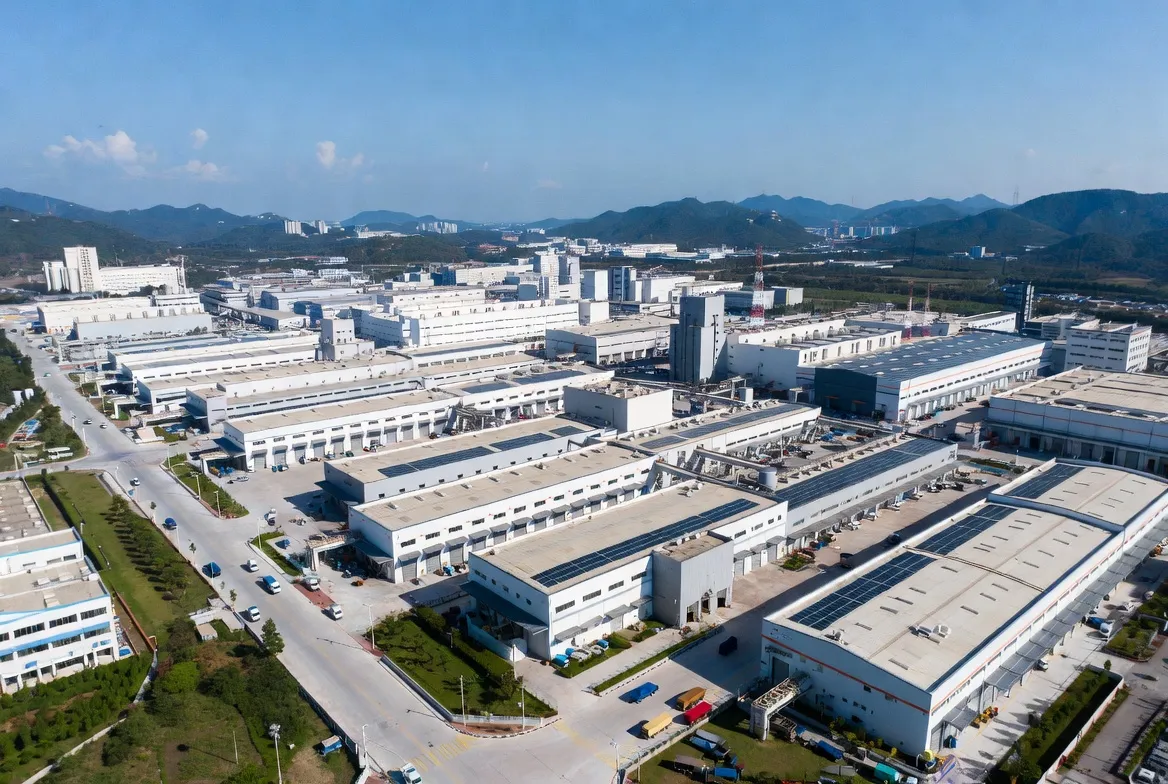
Vertically integrated manufacturing ecosystem in China – enabling fast and efficient product development
China’s manufacturing output has evolved far beyond low-cost assembly. Under the 15th Five-Year Plan formalized in March 2026, the focus has shifted toward high-quality, innovation-driven production in strategic sectors such as advanced manufacturing, AI, green technologies, new energy vehicles, robotics, semiconductors, and biomanufacturing.
Here are the key reasons China leads in 2026:
- Unparalleled Infrastructure and Supply Chain Integration
China’s ecosystem features vertically integrated clusters (e.g., electronics in Shenzhen, automotive in Guangdong). This enables faster sourcing of components, reducing lead times dramatically compared to fragmented supply chains elsewhere. - Cost Efficiency with Advanced Capabilities
While wages have risen, automation, robotics, and digitalization keep unit costs competitive. High-tech manufacturing (e.g., solar panels, EVs) grew rapidly in early 2026, with emerging industries posting strong gains in high-tech equipment. - Speed and Scalability
Rapid prototyping tools like 3D printing shorten development cycles from weeks to days. Factories now support small-batch runs and modular production lines, ideal for testing markets without massive upfront investment. - Expertise in Emerging Technologies
Government initiatives drive “AI + Manufacturing,” robotics, and smart factories. The 15th FYP prioritizes R&D, with digital transformation enabling shorter product cycles and frequent iterations. - Economies of Scale and Customization
Massive supplier networks allow for customizations at scale, from injection molding to CNC machining, at prices that support healthy margins. - Sustainability and Modernization Focus
Modernization of traditional sectors (steel, aluminum, mining) emphasizes efficiency, quality, and green practices, aligning with global ESG demands. - Resilience Through Policy Support
The plan emphasizes self-reliance, upstream R&D, and downstream consumption, making China more attractive for tech-forward products.
In short, China in 2026 is no longer just “cheap”—it’s smart, fast, and future-proof.
Step-by-Step Guide to Getting Your Product Developed in China
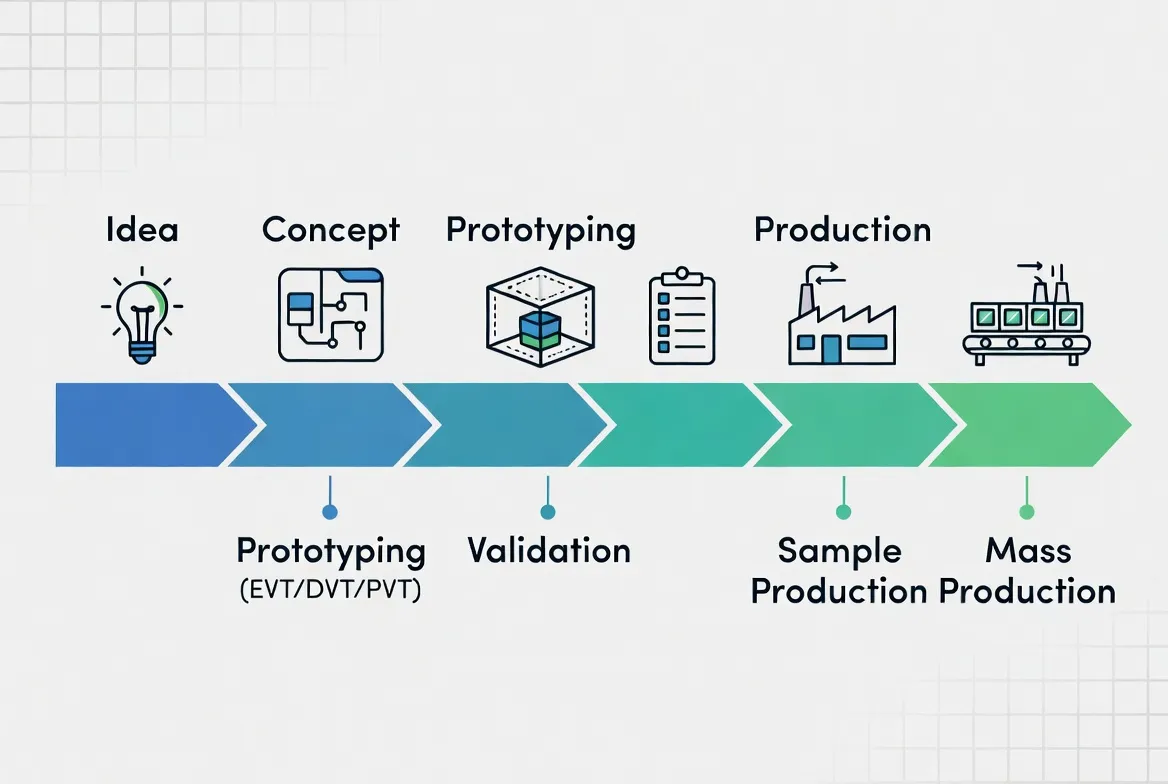
Step-by-step product development process in China: From concept to mass production in 2026
Follow these six expanded steps, refined for 2026 realities. A realistic timeline from idea to mass production is typically 4–6 months, though complex or regulated products may take longer.
Step 1: Define Product Specifications and Requirements
Start with a detailed product brief. Include:
- Technical specs (dimensions, materials, functionality, certifications like CE, FCC, RoHS).
- Target market needs, pricing strategy, and volume projections.
- CAD drawings, 3D models, or sketches (use tools like SolidWorks or Fusion 360).
Pro Tip: Conduct preliminary market research and competitor analysis. Factor in 2026 raw material trends (e.g., copper and aluminum price fluctuations). Budget 10–20% contingency for iterations.
Step 2: Research and Select Reliable Manufacturers
Use our platform to go beyond online listings:
- Request RFQs from 2-3 suppliers.
- Verify via on-site audits, third-party inspections.
- Prioritize factories with ISO certifications, experience in your category, and references from similar clients.
2026 Update: Look for suppliers investing in digitalization and automation for better quality and shorter lead times. Consider “China Plus One” hybrids for risk mitigation.
Step 3: Negotiate Contracts and Terms
Secure a comprehensive manufacturing agreement covering:
- Pricing (unit cost, MOQ, tooling/mold fees).
- Payment terms (30% deposit, 30% on samples, 40% before shipment).
- Intellectual property clauses, NDAs, and non-circumvention agreements.
- Quality standards, timelines, and penalties for delays.
Key 2026 Advice: Use China-specific NNN (Non-Use, Non-Disclosure, Non-Circumvention) agreements enforceable in local courts. Get competing quotes to strengthen your position—prepared buyers earn respect and better deals.

Negotiating manufacturing contracts and specifications with reliable Chinese suppliers
Step 4: Prototype Development and Testing
Break this into phases (as per industry best practices):
- Proof-of-Concept (POC): Validates core functionality (1–2 weeks).
- Engineering Prototype: Uses final materials and tests durability (2–4 weeks).
- Pre-Production Sample: Focuses on aesthetics, manufacturability, and packaging.
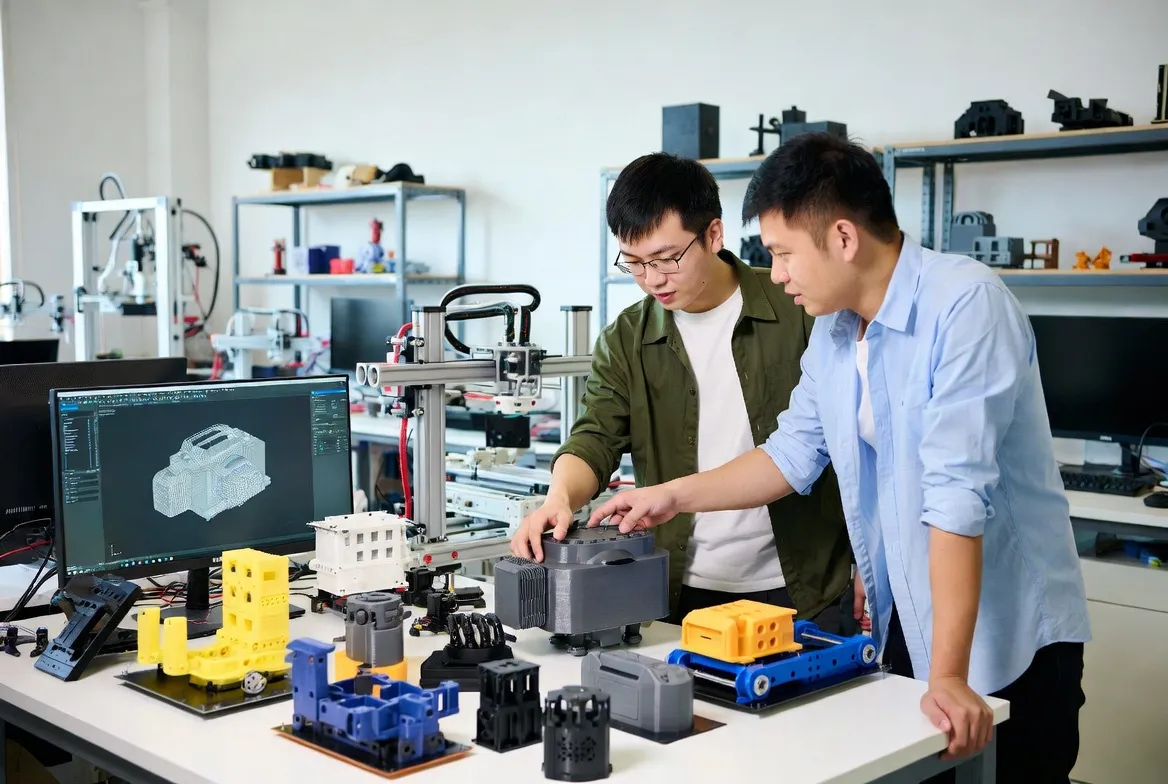
Rapid prototyping and 3D printing stage during product development in a Chinese facility
Costs in 2026: Simple 3D-printed prototypes start at $10–$200 per piece; complex custom molds range from hundreds to thousands. Multiple iterations are common—budget accordingly.
Test rigorously for safety, compliance, and performance. Use third-party labs for certifications.
Step 5: Quality Control and Assurance
Implement multi-stage QC:
- Pre-production inspection.
- During-production checks.
- Pre-shipment inspection (PSI) covering 80–100% of key criteria.
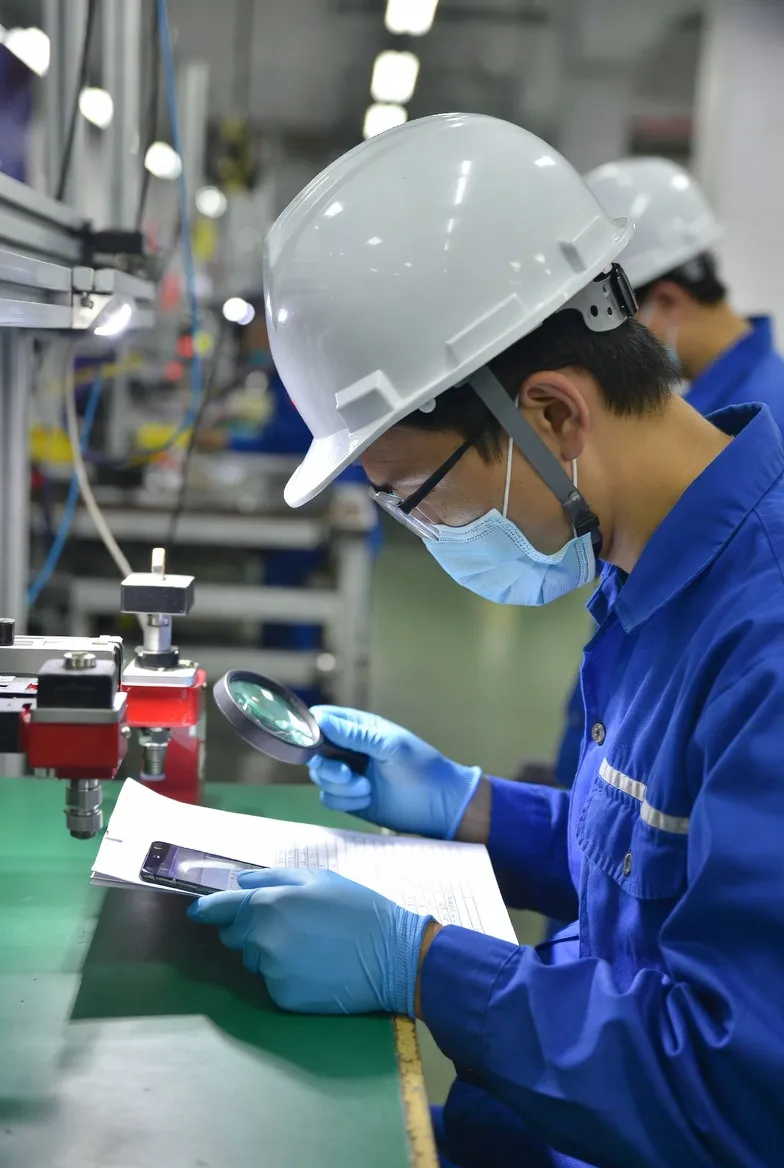
Rigorous quality control inspection during product manufacturing in China
2026 Reality: Post-Lunar New Year rushes and port congestion remain risks. Diversify ports and use 3PL providers. The original statistic of ~42% shipment delays (Drewry data) still highlights the need for 20–30% buffer in timelines.
Hire independent inspectors or leverage your sourcing partner for ongoing oversight via weekly video reviews and milestone checkpoints.
Step 6: Scaling to Production and Logistics
Once samples are approved:
- Finalize tooling and ramp up to mass production.
- Handle packaging, labeling, and export documentation.
- Choose Incoterms (FOB, CIF) and freight forwarders wisely.
Logistics in 2026: Factor in e-commerce-friendly options and sustainability (e.g., lower-carbon shipping). Pre-approve customs brokers to avoid delays.
Key Benefits of Developing Products in China
- Access to World-Class Supplier Networks: Instant access to specialized vendors reduces R&D time and costs.
- Customization at Scale: From private-label to fully bespoke—factories excel at rapid design iterations.
- Economies of Scale and Lower Unit Costs: High volumes drive down prices dramatically, improving margins.
- Innovation and Speed: AI agents, generative design, and robotics enable faster product launches.
Businesses report 30–50% cost savings versus domestic production in many categories, with faster time-to-market.

AI and robotics transforming product development and manufacturing in China 2026
Understanding Costs: A 2026 Breakdown
Product development costs in China vary widely but remain competitive:
- Prototyping/Samples: $50–$300+ per unit (simple) to thousands for complex electronics.
- Tooling/Molds: $1,000–$50,000+ depending on complexity.
- Mass Production: Unit prices often 50–70% lower than Western alternatives at scale (e.g., 5,000+ units).
- Hidden/Additional Costs: Quality inspections ($300–$1,000 per visit), shipping/duties, certifications, IP registration, and buffers for raw material fluctuations (e.g., metals up significantly in early 2026).
Create a detailed spreadsheet comparing quotes. Factor in NRE (Non-Recurring Engineering) fees for custom work—typically $10,000–$500,000+ for advanced products.
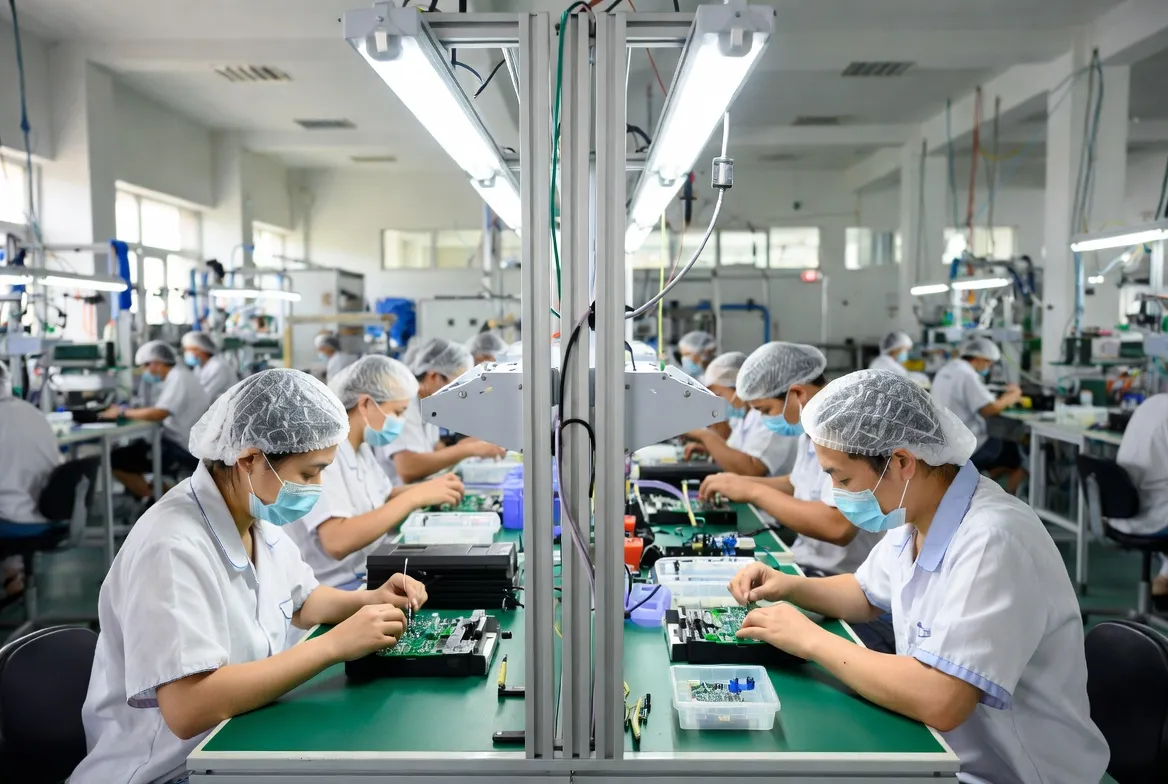
Precision assembly of electronic products in a state-of-the-art Chinese manufacturing facility
Common Challenges and How to Overcome Them
- Language and Cultural Barriers: Solution—Work with bilingual sourcing agents or partners fluent in Mandarin.
- IP Risks: Theft remains a concern, but 2026 CNIPA enforcement is strengthening (see dedicated section below).
- Quality Variability: Mitigate with strict QC protocols and supplier audits.
- Logistics and Delays: Budget extra time; diversify suppliers and ports.
Other issues include payment disputes and post-pandemic supply disruptions—address via clear contracts and relationship-building.
IP Protection Strategies in China 2026
Register patents, trademarks, and designs in China immediately—foreign rights offer little protection.
Use:
- Invention/utility/design patents.
- NDAs/NNN agreements tailored for PRC enforcement.
- Compartmentalize sensitive info (e.g., bifurcate R&D).
- Monitor e-commerce platforms (Alibaba, etc.) and record with customs.
CNIPA’s 2026 Work Plan emphasizes stronger administrative protection, especially in emerging fields like AI. Recent reforms include better dispute resolution and executive liability for trade secret theft. Layer protections: legal registration + operational controls + ongoing monitoring.
Essential Tips for Success
- Start Small: Test with low MOQs and prototypes before scaling.
- Build Strong Relationships: Trust, long-term commitment, and reciprocal respect are key. Visit factories when possible.
- Leverage Local Expertise: Use sourcing agents for on-the-ground presence.
- Stay Actively Involved: Weekly reviews, checkpoints, and hybrid oversight (video + visits).
- Adopt China Plus One: Diversify for resilience without abandoning China’s advantages.
- Focus on Sustainability: Align with green manufacturing trends for better market appeal.
Real-World Case Studies
- BYD in EVs: Leveraged China’s supply chain to surpass competitors globally through rapid innovation and scale.
- Huawei’s Integrated Product Development (IPD): Shortened R&D cycles dramatically while boosting quality and revenue.
- Consumer Electronics and Toys: Numerous brands use Shenzhen ecosystems for fast, cost-effective launches with customizations.
These examples show how proper execution delivers transformative results.
The Future of Product Development in China
The 15th Five-Year Plan drives “New Quality Productive Forces” with heavy investment in AI, robotics, quantum tech, and green innovation. Expect more cognitive manufacturing (AI agents), generative design at scale, and flexible production. Sustainability and digitalization will dominate, making China even more attractive for forward-thinking businesses.
Frequently Asked Questions (FAQs)
Q1: How long does it take to develop a product in China?
A: Typically 4–6 months, depending on complexity.
Q2: What are the biggest risks?
A: IP issues, quality, and delays—mitigated with proper contracts and QC.
Q3: Is China still cost-effective in 2026?
A: Yes, especially for scaled production and tech-enabled processes.
Q4: How do I protect my IP?
A: Register locally and use robust China-specific agreements.
Q5: Should I use a sourcing agent?
A: Highly recommended for first-timers to navigate complexities.
(Additional FAQs can be expanded based on your specific product.)
Conclusion and Next Steps
Developing products in China in 2026 offers tremendous opportunities when approached strategically. By following this guide, you can navigate the process confidently, avoid common pitfalls, and achieve scalable, profitable results.
Ready to get started? Contact the experts at CareFromChina for personalized support—whether it’s supplier sourcing, prototype development, quality control, or full turnkey manufacturing. Submit your product idea today and take the first step toward success in the world’s most dynamic manufacturing hub.
Whatsapp Us: +86-13923347227 or write to us: [email protected]
Induction Cooker vs Infrared Cooker: Which is Better in 2026? The Ultimate Global Comparison Guide
Recover Money from a Supplier in China: A Practical Guide for Importers